Wine drinkers of the world, I have a challenge for you: nominate wines to match every course of every meal of the day. It’s not easy, especially finding wine for spicy food and for most desserts.
Now consider beer; it has more than 100 styles that range between savoury, bitter, sweet, sour, smoked and even salty, from light bodied, low alcohol Helles lager to full bodied, high alcohol barley wine.
When matching with food, there are beers that pair brilliantly with dishes of every cuisine, as well as all meals of the day, breakfast included, along with fine and informal dining.
Beer matched with food can present a point of difference to a venue’s offering and provide customers with an experience they cannot get everywhere. Wine has tannins, acidity, body and alcohol level as tools for matching with meals. Beer has those too, and much more. These are the properties of beer that are so useful for pairing well with food:
There is a belief that wine is ne plus ultra when it comes to gustation and that to dine with wine is the proper thing to do. Belgians, whose beer culture is included in UNESCO’s cultural heritage of humanity list, might disagree. In Belgium, beer is routinely on the dining table and served in elegant chalices, snifters or tulip glasses on stems.
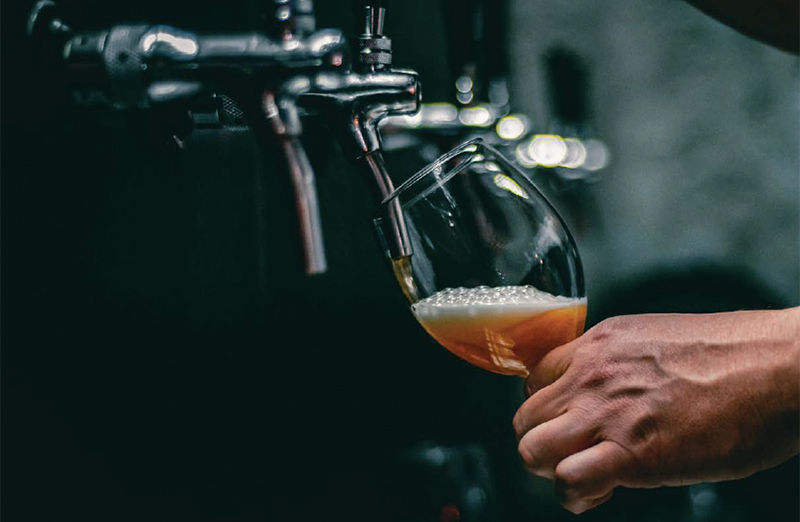
Beer is Britain’s national drink and deserves to be on dining tables too, but not in a pint glass. In the UK, the legal measure for draught beer is increments of imperial pints and has been since the mid-19th century, so the association of beer with casual drinking, glugging in large volumes, is long standing. This is one reason why beer is largely overlooked as a drink with food. The answer is to serve it in a wine glass or other suitable goblet, leaving the pint in the bar.
With a three-course meal, there are three chances to upsell beer – a different one for each course, four if diners decide to have cheese as well. How about this feast – a smoked salmon starter with India Pale Ale, mushroom risotto with Brown Ale, Tiramisu with Kriek (sour cherry), and Stilton with Porter. Bliss!
Jane Peyton is the founder of the School of Booze. In her online beer, cider and wine courses she focuses on food matching.
This article featured in the recently published HQ Magazine.
Be part of our well-respected network, get trusted advice and take a positive approach to your learning and development.
Your business card may take a moment to be generated. You can save your business card by right clicking -> save image as, or holding down on the image on your phone.