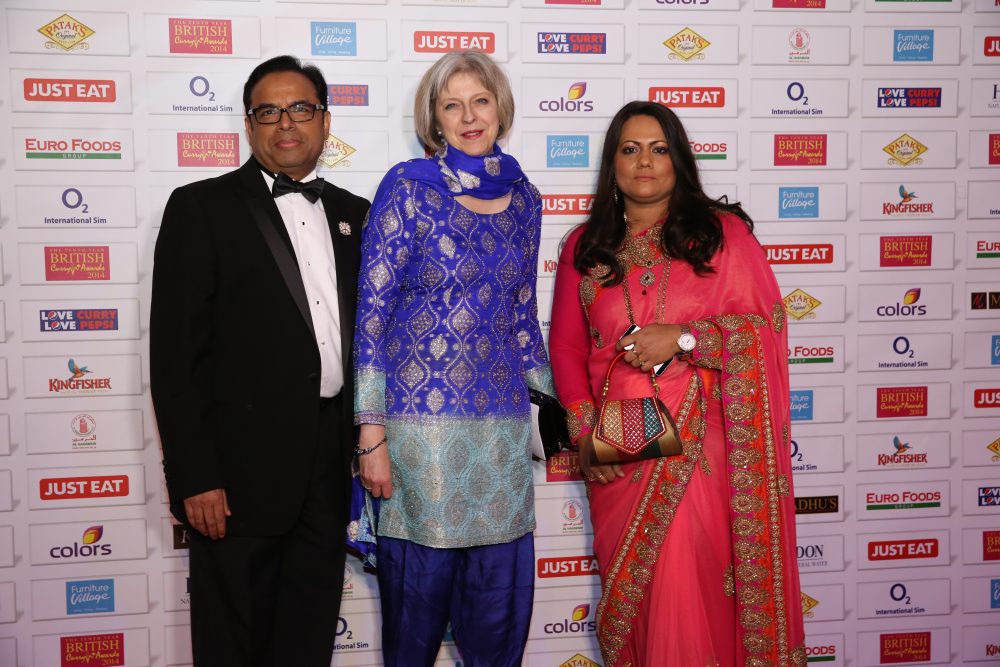
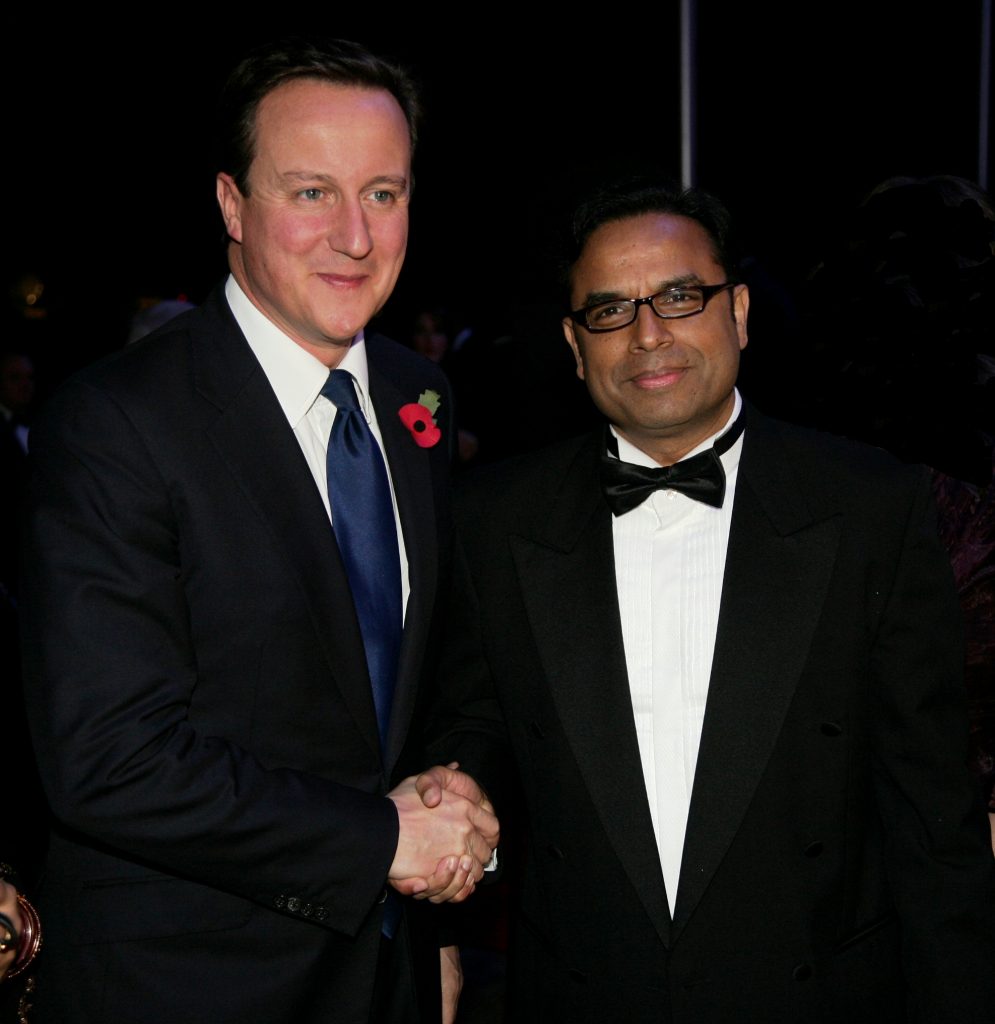
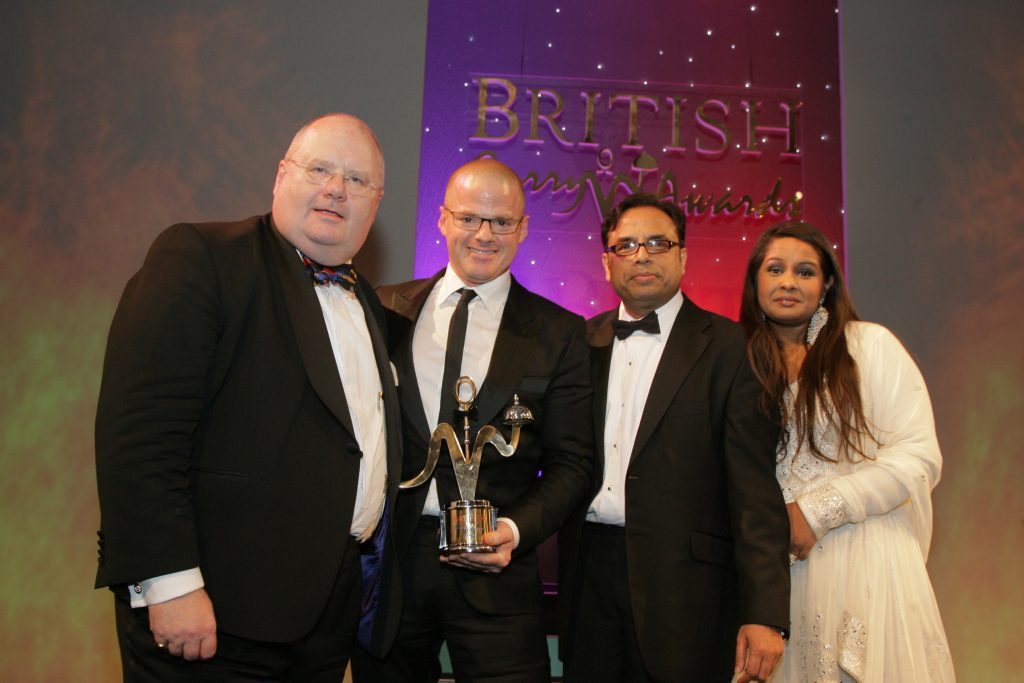
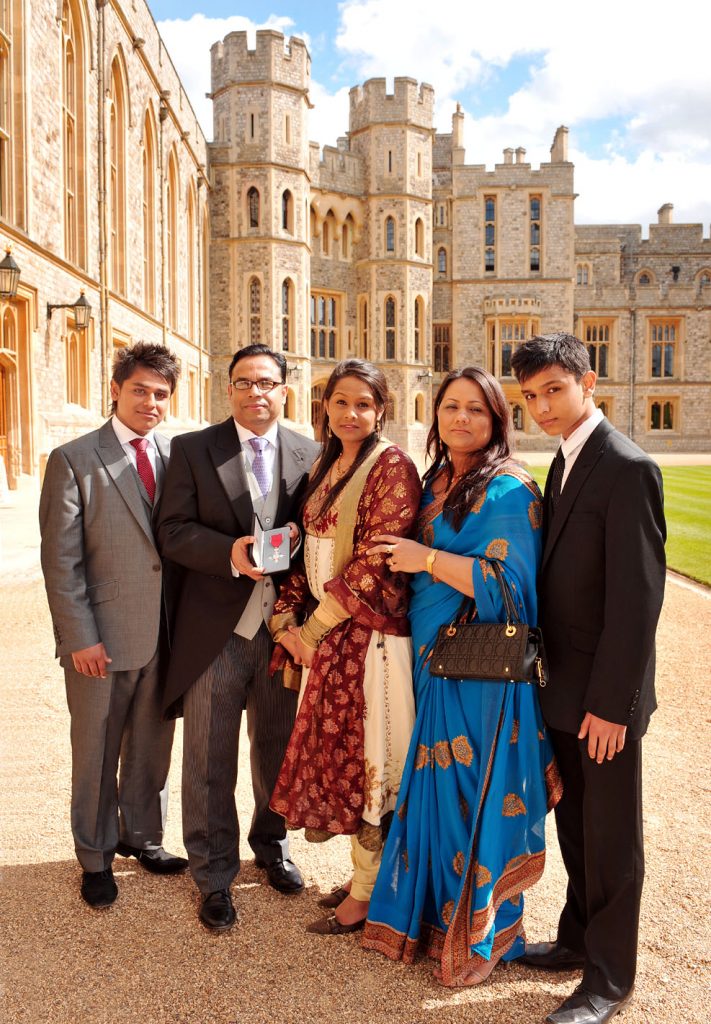
 Enam Ali MBE FIH is among the most prominent British Asian personalities, known for his leadership and passionate concern for the interests of the British curry industry. Ali has pioneered British curry as a cuisine in its own right, not only in the UK, but worldwide. He founded the annual British Curry Awards in 2005 which is dubbed as the ‘Curry Oscars,’ attracting a host of politicians and high profile celebrities. This year, he won the Outstanding Contribution to the Industry Award at the Institute of Hospitality Awards.
What problems are Indian restaurants in the UK facing?
The shortage of staff and chefs is creating a lot of problems. People feel sometimes that the consistency of service and quality is not the same anymore. If you go to any curry house now you will find that 50% of the staff are East Europeans. Their knowledge is still lacking in terms of spices and dishes and on that basis, they are losing business and their confidence and sometimes closing. I am hearing this everyday as a publisher and an editor. I know most of them by name. When they share their stories with me I feel very helpless because this is the livelihood of their generation. And the new generation is not encouraged by this because they see their dad or uncle is suffering. It is killing the industry in another way, by not encouraging a new generation. I have given my life to the British curry industry and I continue flying the flag for British curry, but the new generation are not encouraged.
Are you still campaigning for a change in the law regarding immigration for skilled South Asian chefs?
Indeed. I’ve been doing it for a long time. We need temporary chefs to continue if our restaurants are to survive. A £4.3b industry is dying and it’s very sad. We are responsible for 100,000 jobs, and it’s not only the restaurants. There is a knock-on effect on suppliers in the long term.
Last year I submitted a 100-page document to the Home Office. The only way to make it work is to have a similar policy as that in Dubai or Qatar, so the people who come here have no right to claim anything. They come for one to three years, work as a chef and then return. They cannot bring their family. They will have private medical insurance and not use the NHS. If they are paid £25,000 (with accommodation included) or up to £40,000 per year, they can afford it. If they want to come back after three years, that’s fine. They can apply again. But they do not create any pressure on local services.
Have you had a reply from the Government?
I am expecting the government to come up with a solution, but they are not going to touch my submission until the Brexit situation is settled. We are not going to have people coming here in the old style and bringing their families with them because British people do not want any more immigration and I respect that.
Can we find Indian chefs already living in the UK?
I opened an academy to train young chefs and I didn’t find any. I have been advertising and trying everywhere. There are a number of reasons. If my academy was in the north or the midlands, maybe I would get some students, but I am in Surrey, a very affluent area, and nobody wants to be a chef. Young people are not interested in those kinds of jobs. This is the real testament of my academy and I think I was able to demonstrate to the government the problem.
Is immigration the sole reason for Indian restaurants closing or are changing tastes and increasing choice factors too?
British curry is still the best in the world. If you go to India you will not find what you get here. The authenticity, purity and taste is far better here. When Brits go on holiday, one of the first things they want when they come back is a curry. Chicken tikka masala is a national dish. It’s a huge success story that I want to survive. The potential is huge. There is no shortfall of customers at all. I have my restaurant in Epsom and I see that people are still hungry for good Indian food and good quality service.
Why do you support Brexit?
 I am an immigrant myself. I came to Britain in 1974. I do not remember a single day that I have not worked since I arrived. Now, how come you can walk into this country just because you live in Europe and you have made no contribution and you are in the same queue as me in terms of NHS, in terms of welfare? It’s unfair.
Secondly, if I want to bring someone from outside Europe, they are not allowing me. If I want to bring a loved one to see my cousin or someone else, I have hundreds of restrictions; so on that basis and on the grounds of nationalism I believe in Brexit. I am very pro-Britain and pro-royalty and I believe that Britain is a land of opportunity.
How have you developed your leadership skills?
Whatever you do in society, respect others and try to learn. Never be a burden to society. Become a person with a reputation that is not carried by birth or education. You have to build on your own success by yourself by how you communicate with people. Your character and personality are your responsibilities. You are responsible for how someone looks at you, how they talk to you, the way they see you. If someone likes you or hates you, you created that reaction.
Be nice to people, be kind, do the best you can. We are all human beings. We are all immigrants of the world. We are not permanent citizens even though we temporarily fight for passports, borders or nationality. We are here for 80, 70, 60 years and we will take nothing with us except our legacy and our memory. If people remember you as generous and kind and they keep on mentioning you, then that will be a blessing.
Interview by Ben Walker MIH.
Read the full interview in your forthcoming HQ Magazine.
Watch Enam Ali MBE FIH speaking on Channel 4 News
The 2018 British Curry Awards are on 26 November
at Battersea Evolution, London
Be part of our well-respected network, get trusted advice and take a positive approach to your learning and development.
Your business card may take a moment to be generated. You can save your business card by right clicking -> save image as, or holding down on the image on your phone.