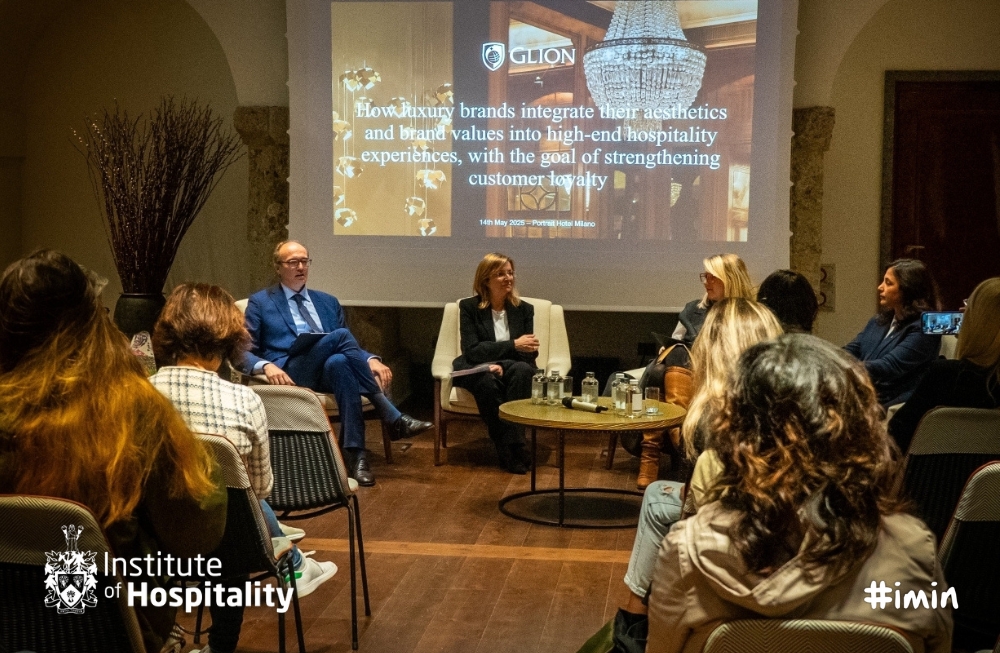
Held at the Portrait Hotel, part of the Lungarno Collection, the hospitality division of Ferragamo, the event gathered key voices from the luxury, communication, and education sectors to examine the strategic convergence of luxury and hospitality.
Moderated by Massimiliano Sarti, Chief Editor of The Bulletin/Thrends and Italy correspondent for HospitalityInside.com, the panel brought together:
The speakers addressed a series of strategic and operational questions concerning the integration of brand identity into the guest experience. A key theme was the mutual value creation in partnerships between luxury fashion brands and hospitality operators.
Margot outlined the rationale behind this growing trend, highlighting that luxury brands are increasingly viewing hospitality as a natural extension of their world, a means of curating immersive, multi-sensory experiences that go beyond product and retail.
Cristina offered insight into how hoteliers interpret and operationalise the visual and cultural codes of fashion brands within their properties. She noted that authenticity and consistency across every guest touchpoint are essential, whilst also discussing the importance of strategic communications, combining traditional public relations with social media and influencer engagement to reach niche, high-value audiences.
From a talent perspective, Eleonora emphasised the growing need for hybrid profiles. She also underscored the demand for soft skills such as adaptability, emotional intelligence, and storytelling, alongside technical knowledge in brand strategy, customer experience and digital communication.
The panel concluded with a reflection on the growing opportunities for cross-sector careers and collaborations. All three speakers agreed that blending fashion and hospitality presents both creative and business potential, but demands a deep understanding of both worlds.
Eleonora Cattaneo, Director of the Master in Luxury Management and Guest Experience at Glion Institute of Higher Education, said: “In the world of luxury hospitality, basic technical skills, such as using reservation management software or understanding check-in procedures, are fundamental, but can be easily taught.
“What truly sets a good professional in the sector apart is the ability to understand and interpret the customer’s needs. It is not just about knowing how to serve, but about recognising the kind of experience each guest is looking for, often without them expressing it openly. This ability develops with experience, but some are born with a natural sensitivity.
“For this reason, in our courses, we don’t just teach the theory; our students must deal with real situations, visit luxury facilities, analyse customer behaviour and put into practice what they learn. Soft skills, such as empathy, listening ability and reading customer behaviour, are essential, but a psychological approach to the relationship with the guest is also crucial, constantly refining these skills through practical experience”, she concluded.
Be part of our well-respected network, get trusted advice and take a positive approach to your learning and development.
Your business card may take a moment to be generated. You can save your business card by right clicking -> save image as, or holding down on the image on your phone.