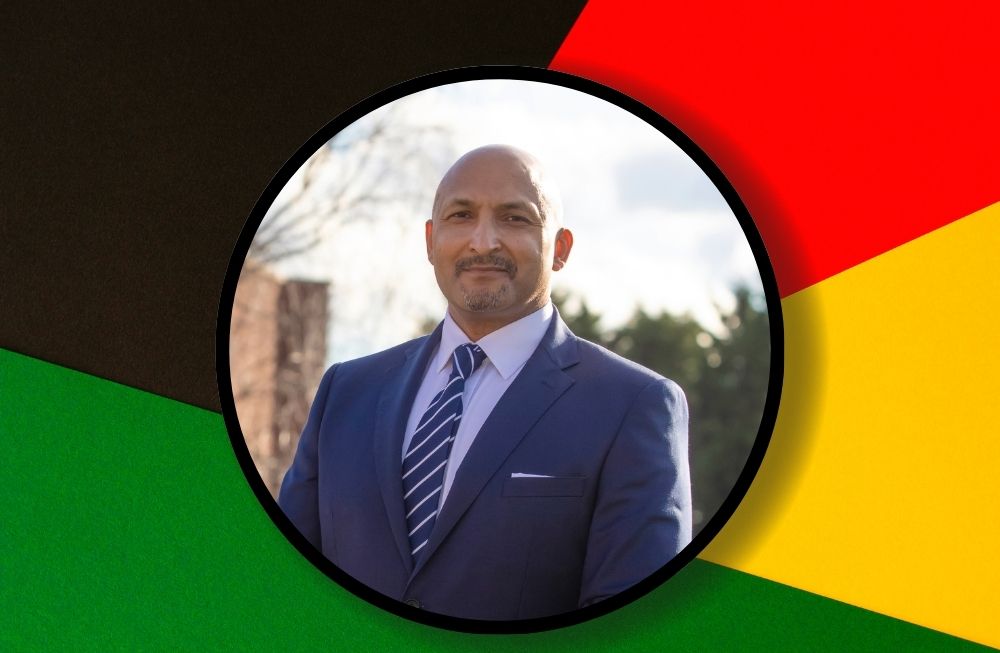
 To celebrate October’s Black History Month, we shine a spotlight on Hereward College CEO, Paul Cook MBE MIH.
Tell us a little more about yourself and what you do.
I’ve worked in education and training for more than 25 years and I’m the Chief Executive and Principal of Hereward College, a specialist further education college based in the West Midlands. Hereward has a history of providing pioneering education to the disabled community and those with special education needs for over 50 years. The College is rated outstanding in a number of key areas and is a sector leader in the development of employment programmes. We are partners with Whitbread PLC and manage their Thrive Programme, a national award-winning employment initiative that provides work placements for young people with special educational needs and disabilities in Premier Inn hotels via a supported internship. We also assist Whitbread in placing Premier Inn training facilities in education settings to serve as high-quality, realistic working environments to support learning.
What does Black History Month mean to you, and how will you be marking it?
Black History Month is now an established and important event in the academic calendar, and, like many schools and colleges across the country, we will be marking it with inspiring lessons and classroom displays highlighting the positive impact black people have made on British culture. Personally, I think it’s great that in a very busy world, we devote a period of time to reflect on the many achievements of black people, and it gives me great pleasure to see people from very diverse backgrounds enjoy learning about black history and the many achievements.
What do you think the hospitality sector can do to be more inclusive and accessible?
I specialise in employment programmes for people with special educational needs and disabilities. As part of that work, I have met a lot of leaders in the hospitality sector who recognise the importance of a diverse workforce and who are investing in progressive schemes to meet that end. I believe that supported internship programmes are a powerful means by which to invest in talent from a community that has been overlooked for too long. I would encourage all employers to get involved by contacting their local further education providers.
Who has been a role model to you during your career?
I have certainly learned from many people over the years, and I can name a great many more who I have observed and admired but I don’t have one that I would call a role model. I tend to gravitate towards individuals who have shown great tenacity and who have overcome significant hurdles to achieve their goals. In my youth, I was a great admirer of Marie Curie, and she was one of the reasons I studied for a degree in chemistry. I also had a local hero in Sheffield in the form of Herol “Bomber” Graham, who fought for the world middleweight boxing title three times and was a much-admired figure in the community. More recently, I have admired the likes of Marcus Rashford MBE, who, in his own words, ‘lent his voice to those who were voiceless’ to lobby for more support for disadvantaged children.
How has your personal background shaped the values and principles you bring into your work today?
I am from a mixed heritage working-class family, and I was raised in a council estate in Sheffield by parents who worked very hard for their living. Therefore, when I was growing up, I was grateful for whatever my parents could provide, and from an early age, I developed a very strong work ethic. As a youngster, I also studied Japanese martial arts, drawn to them due to the emphasis on self-development and the pursuit of perfection. I do not doubt that these elements of my character persist today, albeit tempered by a long and successful career.
Why did you join the Institute of Hospitality?
I was invited to a round table event at the Institute of Hospitality’s Passion4Hospitality Conference to discuss good practice in developing schemes to improve access to the industry for people with special educational needs and disabilities. And I was inspired and enthused by the level of the discussion and the motivation from those present. I believed at that point and since then, that it would be a useful vehicle to discuss innovative ways of increasing diversity.
This year’s theme for Black History Month is “Standing Firm in Power and Pride”. What does this phrase mean to you personally and professionally?
For me, this phrase is particularly important at the moment as we see a rise in hate and intolerance in our community. I think it is vital that we focus on our fundamental British values, which is something that the vast majority of education leaders across the country promote. These values are democracy, the rule of law, individual liberty, mutual respect and tolerance of those with different faiths and beliefs. For me, these values are something to be very proud of; they are powerful, and we must stand firm to preserve them.
Be part of our well-respected network, get trusted advice and take a positive approach to your learning and development.
Your business card may take a moment to be generated. You can save your business card by right clicking -> save image as, or holding down on the image on your phone.