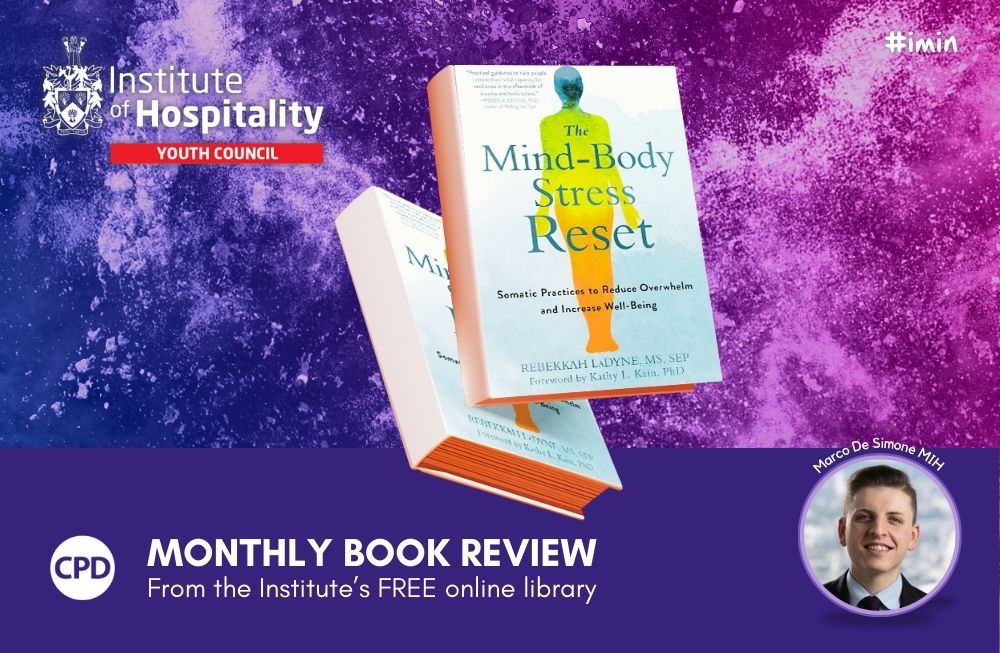
This month Youth Council Vice Chair, Marco de Simone MIH reviews ‘The Mind-Body Stress Reset: Somatic Practices to Reduce Overwhelm and Increase Wellbeing’ by Rebekkah LaDyne.
Visit our FREE IoH Online Library
Stress and feeling overwhelmed have become all too familiar companions for many in today’s world. As our lives grow busier, the need for effective tools to manage these conditions has never been more critical.
First, LaDyne lays the groundwork for understanding the relationship between the mind and introduces readers to the concept of somatic practices, physical exercises designed to calm the nervous system, reduce stress and promote relaxation. Many conventional stress management strategies focus primarily on mental or emotional approaches; somatic practices emphasise the importance of physical awareness.
One of the early chapters discusses the nature of stress and how it manifests physically; it is not merely a mental or emotional state, but prompts a fight or flight response, releasing hormones such as cortisol and adrenaline, which prepare us to deal with perceived threats. While this is beneficial in short bursts, chronic stress can lead to a host of physical and psychological problems, including anxiety, depression and even ailments like heart disease.
She introduces readers to the concept of “interoception”, the awareness of internal bodily sensations. By learning to listen to our bodies, individuals can recognise the early signs of stress and take proactive steps to alleviate it before it escalates.
As the book progresses, we delve deeper into one of the key themes, exploring the importance of cultivating a routine. Just as physical fitness requires consistent effort, so does stress management, encouraging readers to view somatic practices not as a quick fix but a commitment to self-care.
A particularly impactful section of the book addresses the role of breath in managing stress. Breathing is closely linked to our nervous system and can be a powerful tool for calming the mind and body. She introduces readers to a number of techniques which are presented with step-by-step instructions, making them accessible to everyone, regardless of age or physical condition. She also discusses how certain types of movement such as gentle stretching, yoga or even walking, can help to release tension and promote a sense of relaxation. Change doesn’t happen overnight, and it is natural to encounter challenges along the way.
In the concluding chapters, the focus is on the long-term benefits of incorporating these practices into one’s life, which can not only reduce stress in the moment but also build a foundation for greater resilience and well-being. The goal is to build a connection between minds and bodies, leading to a more balanced and harmonious state of being.
The book concludes with the author encouraging readers to stay curious and open-minded and to explore different techniques to find what works best for them.
Marco concludes that whether you are new to somatic practices, or a seasoned practitioner, this book provides excellent insights and tools to help navigate the challenges of modern life with greater ease and confidence, particularly helpful for those working in the dynamic and demanding world of hospitality.
This review and rating is the opinion of the reviewer.
5 stars = Exceptional not to be missed | 4.5 stars = Essential read | 4 stars =Very good | 3 stars = Good | 2 stars = Poor | 1 star = Very poor
Suitability: This book is suitable for any hospitality professional, at any level who wants to learn new techniques about managing stress and wellbeing.
This book fits into the Self-Care pillar under the IoH’s Five Pillars of Learning, a new approach to CPD professional learning and development based on the five core areas of hospitality management.
Record your CPD Hours: This book forms part of a member’s CPD hours. You can log your CPD hours here.
Be part of our well-respected network, get trusted advice and take a positive approach to your learning and development.
Your business card may take a moment to be generated. You can save your business card by right clicking -> save image as, or holding down on the image on your phone.